27 October 2026
What Council Money Leaves Behind on the High Street
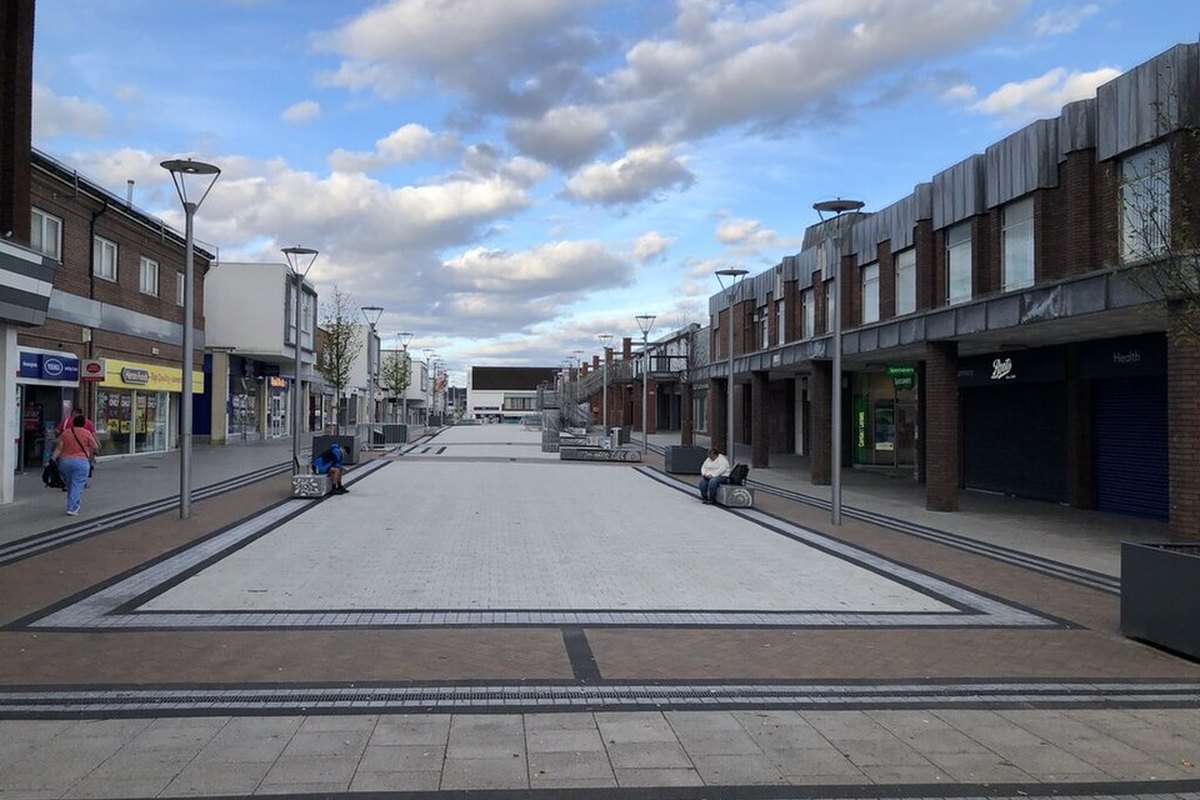
At this time of year, I find myself judging a high street partly by whether there is somewhere dry to sit and a public toilet that is still open. Neither makes much of a regeneration prospectus. Both can determine whether someone stays for another half hour. Council regeneration money deserves scrutiny, but not the easy sneer that every new bench is a waste. Sometimes the bench is precisely what was missing.
The useful distinction, for me, is between spending that removes an obstacle and spending that gives an obstacle a more attractive setting. A difficult crossing can separate shops from the people who would use them. Poor lighting can make an otherwise short walk uncomfortable after dark. Fixing those things has a practical purpose. Replacing sound paving with a different colour of sound paving needs a more demanding explanation than a desire to refresh the street.
The good is not always photogenic
Some of the best council work may leave very little to photograph. Where ownership is fragmented, buying a small strip of land or agreeing rights over it can make a larger site usable. Sorting out access, drainage rights or an electricity connection can unlock something that private owners have been unable to coordinate. Public money has a defensible role here, provided the council understands what it is buying and who will receive the eventual benefit.
That last question matters. If public investment makes a parade more attractive, the benefit may reach shoppers, occupiers and property owners in different proportions. An existing tenant does not necessarily pay more rent the following morning. At a later review or renewal, however, improved trading prospects may support a higher rental value, depending on the lease and the evidence. I would not call that a reason to abandon investment. I would call it a reason to examine the bargain.
Where money goes directly into privately owned property, I would expect the funding agreement to address what happens next. What must the owner deliver? Must the premises remain available for the intended use? Can money be recovered if agreed conditions are broken? Those protections need sensible drafting and someone willing to enforce them. A council should not fund an improvement, celebrate its completion and then discover that its influence ended at the payment date.
The wasted and the well meant
The waste I worry about is not always extravagant. It can be a perfectly competent scheme answering a question nobody quite asked. New signs where the route was already obvious. Bespoke planters without a funded arrangement for watering them. An elaborate surface that costs more to repair than the one removed. Capital funding may be available while the maintenance budget is under pressure. That explains the temptation to build; it does not make the future bill disappear.
The well-meant schemes are harder to judge. A council-backed retail space with discounted rents might help someone test a business. It might also move an existing trader a few doors away, leaving another vacancy and competing with owners who receive no support. I would want to distinguish genuinely additional activity from activity relocated at public expense. An occupied unit is visible evidence. It is not, by itself, evidence that the street is better off.
I also want to see the occupancy costs behind any promise of affordable space. The headline rent may be modest while a service charge has to support shared facilities, security and a heavily managed building. What can be recovered depends on the lease; what the trader can afford depends on the business. A publicly funded scheme should be tested against realistic income and running costs, not only against the number of units it can announce.
I have some sympathy for officers trying to fit a town's needs into funding rules and spending deadlines they did not choose. Consultation, ownership negotiations and procurement take time, and doing nothing has costs too. But sympathy is not a substitute for checking the result. I would rather see a modest scheme still working five years later than an ambitious one whose upkeep nobody can afford. The opening photograph cannot tell us which we have bought.
Need advice on a lease renewal, rent review or dilapidations claim? chris@mcgarrigle.com