28 November 2026
Council Money Should Leave More Than New Paving
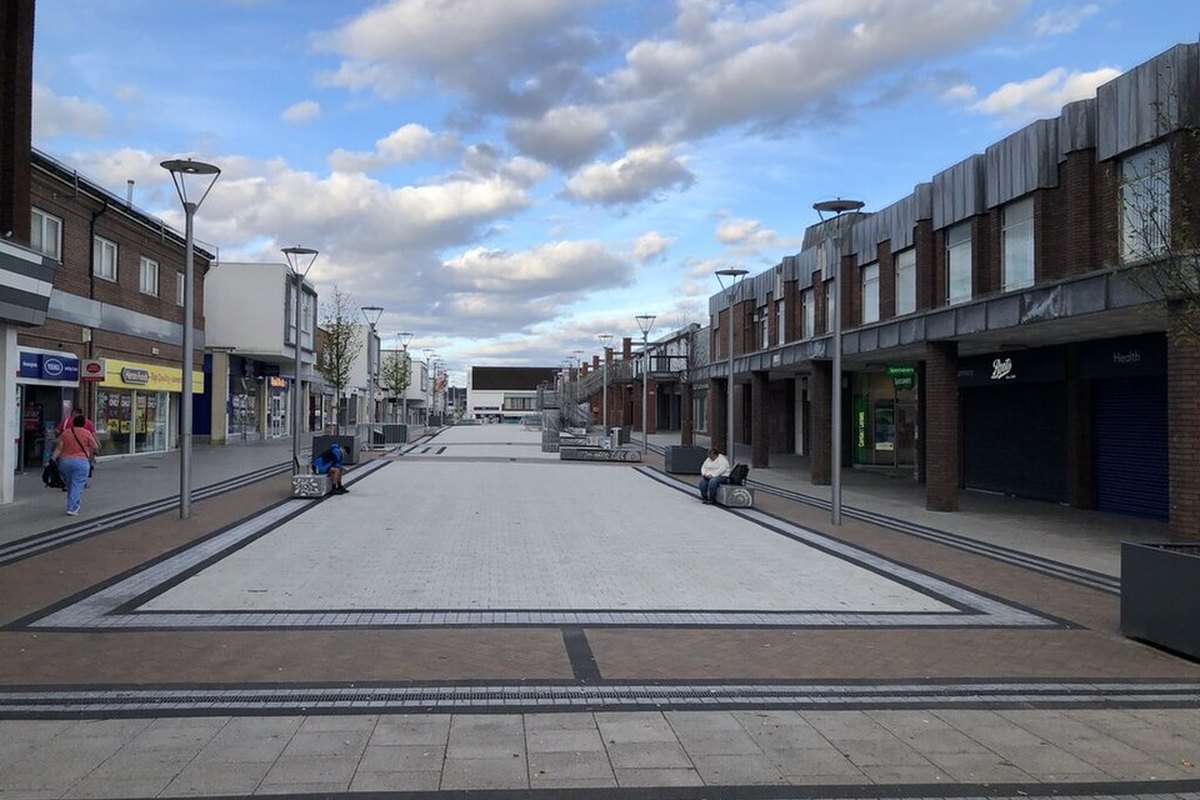
New paving is not, in itself, a waste of council money. I would rather walk on a level surface than pick my way round broken slabs, particularly on a wet November afternoon. Better drainage, lighting and crossings can make a street easier to use. But the photograph taken when the barriers come down tells us very little about whether regeneration has worked. I want to know what the money has put right, and who will have to pay to keep it that way.
The good spending often deals with something too awkward for any one owner or occupier to resolve. Water runs towards several shop thresholds. Deliveries and pedestrians compete for a badly arranged strip of road. A row of upper floors cannot be reached independently of the shops below. Public money can help untangle these shared problems. That seems a stronger starting point than deciding that a street needs a more consistent colour scheme and then finding enough willing applicants to deliver one.
I have spent much of my working life looking at premises through an occupier’s costs and obligations. That makes me wary of treating a grant as an uncomplicated gift. A funded alteration may need the landlord’s consent. Its future repair may fall to the tenant. Depending on the lease and the consent, there may also be an obligation to remove it at the end of the term. None of that necessarily makes the project wrong. It does mean the grant offer is only the beginning of the calculation.
The bill after the grant
Take a shopfront scheme. Repairing rotten joinery and making an entrance accessible can be worthwhile work. Requiring an elaborate replacement frontage, with specialist finishes and expensive fittings, is a different proposition. If the tenant must maintain it, the council has helped choose part of that business’s future repair bill. I would want the specification considered alongside the remaining lease term, the repair covenant and any reinstatement provisions. A frontage intended to last for decades deserves more thought than whether it looks smart on completion.
There is a rent question too, although it needs care. A tenant’s qualifying improvements may be disregarded at rent review under the lease wording; a better public street outside is not simply the same thing. An improved location may eventually support stronger rental evidence, while new leases will be negotiated in whatever market then exists. I do not think this is an argument against improvement. It is a reason not to promise that all the benefit of public expenditure will stay with the businesses already there.
The well-meant scheme can also exclude the very occupier it hopes to help. Match funding requires spare money. Payment after completion requires someone to finance the work first. Obtaining consent, gathering quotations and managing contractors takes time away from the shop. A business can be perfectly capable of paying its way without having the cash or staff to administer a building project. Where funding rules allow, staged payments and practical help can matter more than another round of publicity about the grant.
What survives the opening day
Waste is not always an unnecessary object. Sometimes it is useful work done in the wrong order: a finished surface dug up again, a new lighting scheme without a settled maintenance budget, planting that nobody has the resources to tend. Capital funding can be available when revenue budgets are tight. I have some sympathy for council officers trying to make lasting improvements through that gap. Still, a funding deadline does not remove the need to decide who will inspect, clean, repair and replace what has been installed.
The construction period belongs in the appraisal as well. A scheme may improve access eventually while making a shop difficult to reach for weeks. Rent and wages do not pause because the pavement is behind fencing, and compensation should not be assumed. The delivery plan needs to deal with entrances, loading, signs and the sequence of works in practical detail. Asking an occupier to endure disruption is easier than working out how a customer carrying a bag will actually get through the door.
When I discuss regeneration with students, I try to bring the conversation back from the drawing to the arrangements underneath it. Who owns the improvement? Who repairs it? Can the occupier fund its share without exhausting working cash? What happens when the grant team has moved on? I am not against an attractive street, nor do I expect every public improvement to repay itself through shop takings. I simply think good council spending leaves behind something useful, affordable to maintain and properly accounted for. That is less photogenic than a ribbon, but more durable.
Need advice on a lease renewal, rent review or dilapidations claim? chris@mcgarrigle.com